Over the past few days, headlines and social media posts have created confusion around a so-called “UAE company citizenship update.”
Many readers have understandably asked:
Does this mean founders or investors are getting UAE citizenship?
The short answer is no.
Let’s break this down in simple terms and explain what has actually changed.
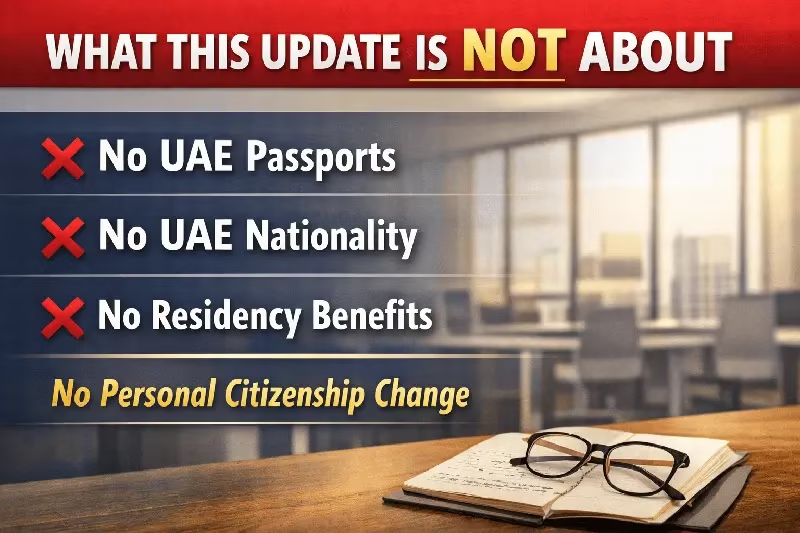
First, what this update is NOT about
This update is not related to personal citizenship in any form.
It does not provide:
-
UAE passports
-
UAE nationality
-
Residency or visa benefits
to founders, owners, shareholders, or investors.
If you own or run a business in the UAE, your personal legal or immigration status remains exactly the same.
So what is the update actually about?
Understanding the UAE Company Citizenship Update
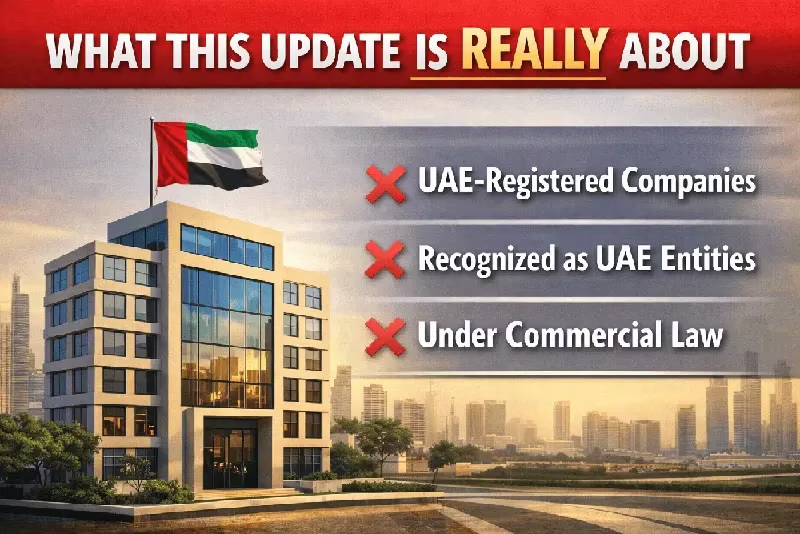
The update applies only to companies, not individuals.
Under recent amendments to the UAE’s Commercial Companies Law, businesses that are registered in the UAE are more clearly recognised as UAE entities under commercial law.
This concept is sometimes referred to informally as “company citizenship”, but it is important to understand that this is a legal and commercial classification, not nationality.
In practice, many countries already follow this principle:
-
A company incorporated in the UK is considered a UK company
-
A company incorporated in Singapore is considered a Singapore company
The UAE is formalising and strengthening this recognition within its legal framework.
Why was there so much confusion?
The confusion mainly came from the use of the word “citizenship” in headlines.
For most people, citizenship immediately implies:
-
passports
-
nationality
-
immigration rights
In this case, the term is being used in a corporate and legal sense, not a personal one. Unfortunately, shortened headlines blurred that distinction.
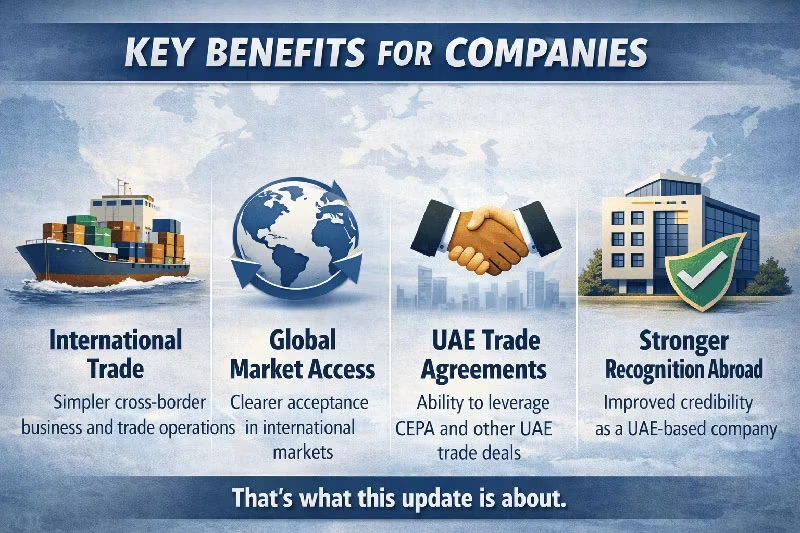
What changes for UAE companies?
For UAE-registered businesses—whether mainland or free zone—this clearer recognition can be meaningful in a commercial context.
It helps companies with:
-
International trade
Clearer recognition as a UAE entity can simplify documentation and acceptance in cross-border dealings. -
Global market access
UAE companies can position themselves more confidently in international markets. -
Use of UAE trade agreements (CEPA)
Recognition as a UAE company supports eligibility under the UAE’s Comprehensive Economic Partnership Agreements, which aim to reduce trade barriers. -
Stronger credibility abroad
Banks, partners, and overseas counterparties often look at a company’s country of incorporation when assessing trust and legitimacy.
As clarified publicly by Abdulla bin Touq Al Marri, this recognition applies only to the company itself, not to its owners or investors.
Who benefits from this update?
This clarification supports:
-
Mainland companies
-
Free zone companies
-
Businesses expanding across emirates
-
Companies planning international trade or overseas partnerships
It is part of the UAE’s broader effort—led by the UAE Ministry of Economy—to make the country one of the most attractive and competitive places in the world to do business.
The simple takeaway
To summarise:
-
❌ No personal citizenship
-
❌ No passports or nationality
-
❌ No visa or residency changes
-
✅ Clearer recognition for UAE-registered companies
-
✅ Better positioning for global trade and expansion
In simple words:
People remain unchanged. Companies gain clearer global standing.
That’s what the UAE company citizenship update is really about.
Disclaimer: This article is for general information purposes only and does not constitute legal or investment advice. Laws and their application may vary depending on business structure and jurisdiction. Always consult a licensed legal or business advisor for professional guidance.